

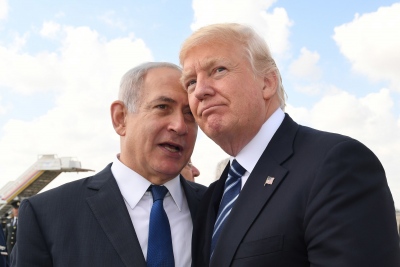
In a historic reversal, US President Donald Trump has backed down following Iran's ultimatum to mine and completely close the Persian Gulf. In a post on Truth Social, Trump announced the suspension of military strikes against Iran for a period of five days. Despite the aggressive rhetoric of previous days, the "ultimatum" from the Iranian side appears to have forced the American president into a disorderly retreat, which has been labeled as "constructive dialogue." Following Trump's announcement, oil prices reacted with significant losses reaching 13%, though losses later moderated, with US crude (WTI) falling 8.96% to $89.43 and Brent dropping 9.53% to $101.50.
The suspension of US strikes in Iran
"I am pleased to report that the United States of America and the country of Iran have, over the past two days, had very good and constructive talks regarding a full and final resolution of our hostilities in the Middle East. Based on the style and tone of these in-depth, detailed, and constructive talks, which will continue throughout the week, I have instructed the Department of War to postpone all military attacks against Iranian power plants and energy infrastructure for a period of five days, subject to the success of ongoing meetings and discussions. Thank you for your attention to this matter!" Trump stated in his social media post.
Iran's reaction
The Iranian news agency, Tasnim, refers to these as... Trump's "claims." "Donald Trump, the terrorist President of the US, claimed today, Monday, March 23, in statements that during the last two days, negotiations were held with Iran which were very good and fruitful. Trump claimed: 'Our talks with Iran concerned achieving a full and comprehensive solution to end our hostilities in the Middle East.' The US President, retreating after Iran's resistance to threats, claimed: 'I ordered the suspension of all attacks against power plants and infrastructure of Iran for a period of 5 days.' He also claimed: 'The deep, detailed, and constructive talks with Iran will continue throughout this week.'"
Warnings of an energy shock
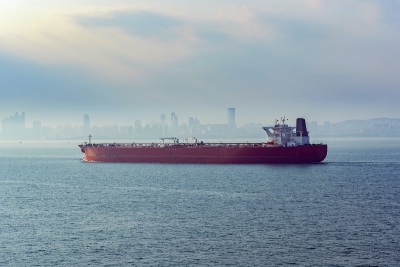
Trump's historic reversal was preceded by warnings of an energy shock and a return to 1973. The global energy crisis caused by the war in Iran is equivalent to the combined strength of the two oil shocks of the 1970s and the effects of Russia's invasion of Ukraine, warned the head of the International Energy Agency (IEA). Fatih Birol, executive director of the IEA, stated that the growing impacts could be severely worsened by disruptions to the "vital arteries of the global economy," including petrochemicals, fertilizers, sulfur, and helium. According to him, the depth of the problems in energy markets—caused by US and Israeli bombings in Iran and the closure of the strategic Strait of Hormuz—had not initially been fully understood by world leaders. This situation led to his intervention last week, when the IEA pushed for demand-restraint measures, such as increasing the number of employees working from home, temporarily reducing highway speed limits, and restricting air travel.
Damage to 40 energy infrastructures
Birol warned that at least 40 energy facilities in the Gulf region have suffered serious or very serious damage; therefore, even an end to the conflict would not immediately restore the energy supply. According to him, about 5 million barrels of oil were lost daily during the two crises of 1973 and 1979. Russia's invasion of Ukraine in 2022 had removed about 75 billion cubic meters (bcm) of natural gas from international markets. However, the current crisis, which began with bombings against the regime in Tehran on February 28, already represents the loss of 11 million barrels of oil per day and approximately 140 bcm of natural gas. Before meetings with Australian Prime Minister Anthony Albanese, Birol told reporters: "This crisis, as things stand now, is two oil crises and one gas crisis put together."
Reserves are insufficient
Birol mentioned that he is consulting with world leaders in Asia, Europe, and North America regarding another possible release of emergency oil reserves, noting that the initial move involved only 20% of total reserves. "If necessary, we can release more oil into the markets, both crude oil and refined products," he stated. "The release of our reserves will help reassure the markets, but this is not the solution. It will only serve to reduce the economic pain." He refused to specify what might trigger a further release. "We will examine the conditions. We will analyze the markets and discuss with our member countries," he said, emphasizing that "no country will be left unaffected by the consequences of this crisis."
Shock forecast from Goldman Sachs
At the same time, Goldman Sachs increased its forecasts for oil prices in 2026 due to the prolonged disruption of flows through Hormuz, which it described as the largest supply shock in history for the global crude market. The price of Brent is now expected to average $85 per barrel in 2026, up from a previous forecast of $77, analysts including Daan Struyven reported in a note. The full-year forecast for West Texas Intermediate (WTI) was increased to $79 from $72. The revisions were based in part on the assumption that flows through Hormuz will remain at just 5% of normal levels for six weeks, followed by a one-month recovery, they noted in the document dated March 22. In the long run, this is expected to lead to cumulative losses of just over 800 million barrels, according to the estimates of the American investment house.
www.bankingnews.gr






Σχόλια αναγνωστών